

FGI UPDATE: This Week’s Summary of U.S. Immigration News
Department of State Issues Visa Bulletin for June 2026
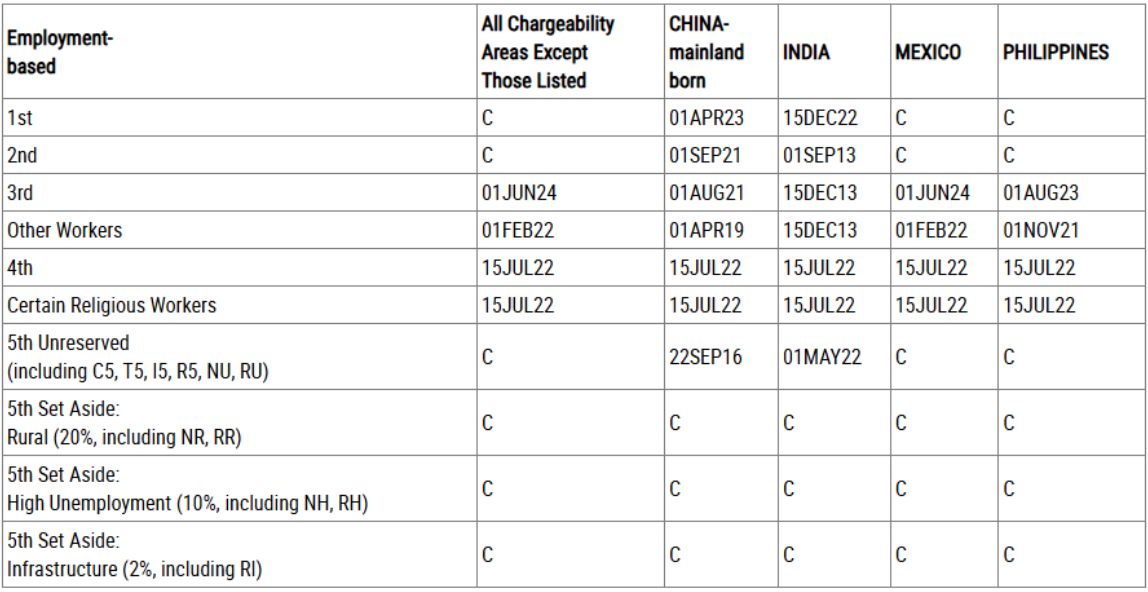
On May 13, 2026, the U.S. Department of State (DOS) issued its monthly Visa Bulletin for June 2026. USCIS has chosen the Final Action Dates chart for employment-based applications for June 2026 to determine eligibility.
USCIS will accept employment-based adjustment of status applications in June 2026 only from foreign nationals whose priority date is earlier than the applicable Final Action Date listed in the State Department’s Visa Bulletin.
Summary
The U.S. Department of State’s June 2026 Visa Bulletin reflects continuing pressure on the employment-based green card system, particularly for Indian nationals in the EB-1 and EB-2 categories. EB-2 India retrogressed sharply to September 1, 2013, while EB-1 India moved backward to December 15, 2022, largely due to extremely high demand and limited annual visa availability. By contrast, EB-3 India and EB-3 China saw modest advancement, potentially encouraging some applicants to consider EB-3 downgrade or interfiling strategies. The State Department also warned that several categories, including EB-1 India, EB-2 India, EB-2 China, EB-3 Philippines, and EB-5 India, could retrogress further or become temporarily unavailable before the fiscal year ends on September 30, 2026.
For employers, the bulletin signals continued delays and uncertainty in green card sponsorship, underscoring the importance of maintaining valid nonimmigrant status for employees and carefully planning immigration strategies. The ongoing disparity between India and most other countries, many of which remain current, also continues to highlight the impact of per-country visa caps on highly populated, high-demand nations. Absent congressional reform, substantial backlogs for Indian employment-based applicants are likely to remain a long-term feature of the U.S. immigration system.
Final Action Dates for June 2026
EB-1
China: Date remains at April 1, 2023
India: Date retrogresses 3.5 months to December 15, 2022
All other countries: Current
EB-2
China: Date remains at September 1, 2021
India: Date retrogresses ten months to September 1, 2013
All other countries: Current
EB-3 Professionals and Skilled Workers
China: Date advances six weeks to August 1, 2021
India: Date advances one month to December 15, 2013
Mexico: Date remains at June 1, 2014
Philippines: Date remains at August 1, 2023
All other countries: Date remains at June 1, 2024.
EB-3 Other Workers
China: Date advances two months to April 1, 2019
India: Date advances one month to December 15, 2013
Mexico: Date remains at February 1, 2022
Philippines: Date remains at November 1, 2021
All other countries: Date remains at February 1, 2022
EB-5 Unreserved (Regional Center and Non-Regional Center)
China: Date remains at September 22, 2016
India: Date remains at May 1, 2022.
All other countries remain Current.
Final Action Dates Chart – June 2026
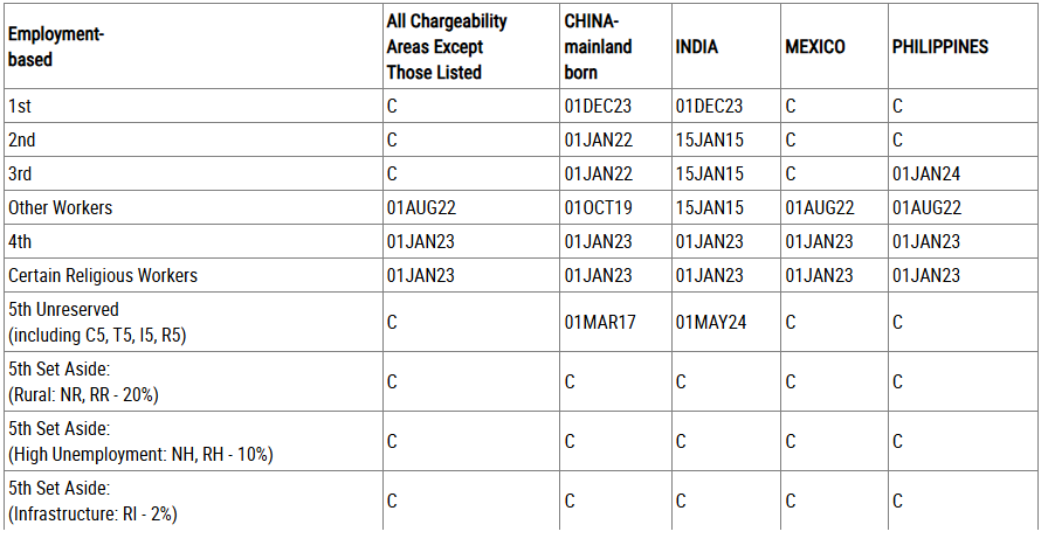
Dates for Filing for June 2026
EB-1
China: Date remains at December 1, 2023
India: Date remains at December 1, 2023
All other countries: Current
EB-2
China: Date remains at January 1, 2022
India: Remains at January 15, 2015
All other countries: Current
EB-3 Professionals and Skilled Workers
China: Date remains at January 1, 2022
India: Date remains at January 15, 2015
Philippines: Date remains at January 1, 2024.
All other countries: Current
EB-3 Other Workers
China: Date remains at October 1, 2019
India: Date remains at January 15, 2015
Mexico: Date remains at August 1, 2022
Philippines: Date remains at August 1, 2022
All other countries: Date remains at August 1, 2022
EB-5 Unreserved (Regional Center and Non-Regional Center)
China: Date remains at March 1, 2017
India: Date remains at May 1, 2024
All other countries: Current
Dates for Filing Chart – June 2026
SOURCE: travel.state.gov/content/travel/en/legal/visa-law0/visa-bulletin/2026/visa-bulletin-for-june-2026.html
USCIS Rule Raises Stakes for Signature Defects in Immigration Benefit Requests
The article explains a major upcoming change in U.S. immigration filing rules where U.S. Citizenship and Immigration Services (USCIS) will be able to deny immigration benefit applications—not just reject them—if they contain invalid or defective signatures discovered after acceptance. This matters because a rejection allows applicants to fix and refile with a fee refund, but a denial means USCIS keeps the filing fee and the applicant must start over, potentially losing time, money, and immigration status opportunities. The rule is scheduled to take effect on July 10, 2026, and reflects USCIS’s effort to more strictly enforce signature requirements in both paper and electronic filings, including issues like scanned signatures, stamped signatures, or unauthorized signers.
Key Points
- Shift from rejection to denial authority: USCIS is now formally authorized to deny applications with invalid signatures after acceptance instead of only rejecting them at intake. This creates a higher-stakes consequence because denial carries more serious procedural and financial outcomes than rejection.
- No ability to cure signature defects: Once a filing is submitted, applicants generally cannot fix or replace a defective signature during adjudication. Even if USCIS issues an RFE or NOID, it will not allow correction of the signature itself, only clarification of signatory authority in limited contexts.
- Fee consequences and procedural impact: If a case is denied due to a signature defect, USCIS retains the filing fee and requires a completely new filing. This can significantly affect applicants facing deadlines, employment authorization issues, or visa cap constraints.
- What counts as an invalid signature: USCIS continues to treat copied, typed, stamped, or improperly affixed signatures as invalid in many contexts. Even scanned signatures must originate from a properly executed handwritten “wet ink” signature in most paper filings.
- Discretion in adjudication outcomes: Officers have discretion to either reject or deny based on factors like the nature of the defect, timing of discovery, and whether the issue appears accidental or part of a pattern of noncompliance.
What Employers Need to Know
- Greater compliance risk in immigration filings: Employers sponsoring foreign workers must ensure strict internal review of signatures because even minor errors can now result in full denial rather than a fixable rejection. This increases exposure to cost, timing delays, and workforce disruption.
- No post-filing correction safety net: HR and immigration teams can no longer rely on USCIS allowing corrections during adjudication for signature issues. This makes pre-filing quality control processes significantly more important than before.
- Operational workflow changes may be necessary: Employers using centralized or high-volume filing systems should implement formal signature verification steps before submission. The article emphasizes that automation or staff-handled workflows must include explicit checks for signature validity.
- Potential appeal and litigation considerations: While some denials may be appealable (for example, via Form I-290B), this adds additional cost and delay. Employers may also face increased legal complexity if deadlines or visa quotas are impacted.
Looking Ahead
- Increased enforcement consistency by USCIS: The rule signals a shift toward stricter and more uniform enforcement of signature requirements. This may reduce prior inconsistency in how officers treated signature defects across cases.
- Higher administrative burden on applicants and employers: Because denied cases must be refiled from scratch, USCIS may see increased resubmissions and appeals, potentially adding pressure to an already backlogged system.
- Greater importance of digital filing infrastructure: As USCIS continues expanding electronic filing systems, organizations will need to stay current on evolving rules for what constitutes a valid electronic or hybrid signature. Requirements may continue to differ by form type and filing method.
- Potential legal and policy challenges: Given prior debates over fairness and consistency in signature enforcement, the rule may face scrutiny or litigation if stakeholders argue it is overly punitive for technical errors.
This USCIS rule significantly strengthens the consequences of signature mistakes in immigration filings by allowing post-acceptance denials instead of simple rejections. While the underlying signature standards themselves are not changing, the enforcement mechanism is becoming far stricter, shifting more risk onto applicants and employers. The practical result is that careful pre-filing review and strict compliance procedures will become essential to avoid costly delays, lost fees, and potential immigration disruptions.
SOURCE: Signatures on Immigration Benefit Requests (DHS Interim Final Rule), Federal Register
https://www.federalregister.gov/d/2026-09289
ICE Crackdown on OPT Program Raises New Concerns for International Students and Employers
U.S. Immigration and Customs Enforcement (ICE) has announced a major enforcement crackdown involving the Optional Practical Training (OPT) program, claiming that nearly 10,000 foreign students are linked to “highly suspect employers,” including alleged shell companies and fake worksites. Federal investigators reported finding empty office buildings, locked facilities, residential homes listed as large employment sites, and companies allegedly operated from overseas while sponsoring students working under OPT authorization. The developments have intensified political and legal scrutiny of the OPT program, which allows F-1 international students to work temporarily in the United States after graduation, and may lead to stricter oversight, additional compliance measures, and possible future restrictions affecting international students and employers alike.
Key Points
- ICE Identified Thousands of Suspect OPT Cases: ICE officials stated that more than 10,000 foreign students were connected to employers considered “highly suspect” during ongoing investigations into OPT compliance. Investigators reportedly discovered empty buildings, nonexistent offices, and residential addresses being used as listed employment locations for large numbers of students.
- Authorities Claim Fraud Involves Shell Companies: Federal officials alleged that some companies participating in the OPT program may have functioned primarily as shell entities rather than legitimate employers. ICE also claimed that some operations appeared linked to overseas management structures, including personnel allegedly operating from India despite OPT rules requiring U.S.-based training and supervision.
- OPT Program Faces Renewed Political Scrutiny: ICE leadership described the OPT system as a “magnet for fraud,” arguing that the program has expanded far beyond its original purpose. The allegations are likely to fuel broader political debates over foreign student employment, immigration enforcement, and labor market protections in the United States.
- Indian Students Could Be Disproportionately Affected: Because Indian nationals make up one of the largest groups participating in STEM OPT and post-graduation employment programs, the enforcement actions may particularly impact Indian students and related employers. Earlier reports already indicated heightened site inspections and tighter scrutiny of OPT compliance affecting tens of thousands of Indian students in the United States.
- Potential Policy Changes Could Follow: Immigration analysts expect the administration may introduce stricter regulations governing employer eligibility, reporting obligations, and student oversight within the OPT system. Some observers have also warned that future proposals could narrow or significantly restrict OPT eligibility altogether.
What Employers Need to Know
- OPT Compliance Reviews May Increase Significantly: Employers participating in OPT or STEM OPT programs should expect heightened government scrutiny, including possible site visits and verification requests. Companies must ensure that work locations, supervision structures, compensation records, and job duties fully comply with federal OPT requirements.
- Remote and Third-Party Placement Arrangements Could Draw Attention: ICE officials specifically highlighted concerns involving questionable worksite arrangements and offshore management structures. Employers using remote supervision models or third-party placement arrangements may face additional review regarding whether students are receiving legitimate training in compliance with OPT rules.
- Students May Face SEVIS Termination Risks: International students found to be working for noncompliant employers could face termination of their SEVIS records and possible loss of lawful F-1 status. Employers should therefore review current OPT employee documentation carefully and address any inconsistencies proactively.
- Future Hiring Pipelines Could Be Affected: Many U.S. employers rely heavily on OPT and STEM OPT programs as pathways for recruiting international graduates into long-term employment and eventual H-1B sponsorship. Increased restrictions or enforcement activity could make it more difficult for companies to recruit and retain international talent in STEM and technology sectors.
Looking Ahead
- Additional Enforcement Actions Are Likely: ICE officials indicated that the identified cases may represent only a portion of broader OPT-related fraud concerns currently under investigation. As a result, employers and students should expect continued audits, site visits, and enforcement activity throughout 2026.
- New OPT Regulations Could Be Proposed Soon: Earlier Department of Homeland Security regulatory plans suggested that the administration may introduce formal OPT reforms aimed at tightening oversight and reducing perceived abuse. Proposed rules could include stricter employer participation standards, expanded reporting obligations, and tighter eligibility requirements for students.
- International Student Interest in U.S. Education Could Decline: Continued uncertainty surrounding OPT and post-graduation work authorization may discourage some international students from choosing U.S. universities. Because OPT is often viewed as a critical pathway to U.S. work experience and future immigration opportunities, instability in the program could affect university enrollment trends and employer recruiting pipelines.
- Legitimate Employers and Students May Face Greater Administrative Burdens: Even organizations and students fully complying with immigration rules may experience increased documentation requirements, delays, and compliance obligations as oversight intensifies. This could lead to higher legal and administrative costs for employers participating in international student hiring programs.
The expanding ICE investigation into alleged OPT fraud marks one of the most significant enforcement actions involving the international student employment system in recent years. While the government argues that stricter oversight is necessary to address abuse and national security concerns, the crackdown is also likely to create uncertainty for universities, employers, and thousands of international students who rely on OPT as an important bridge between education and long-term employment in the United States.
SOURCE: timesofindia.indiatimes.com/world/us/empty-buildings-locked-doors-ice-cracks-down-on-opt-program-says-10000-foreign-students-working-for-highly-suspect-employers/articleshow/131047145.cms?utm_source=contentofinterest&utm_medium=text&utm_campaign=cppst
Trump Administration Waives Visa Bond Requirement for Certain World Cup Fans Amid Broader Immigration Concerns
The Trump administration has announced that foreign visitors from several World Cup-qualified countries will no longer have to pay visa bonds of up to $15,000 to attend the 2026 FIFA World Cup in the United States, provided they purchased official tournament tickets through FIFA. The decision temporarily exempts citizens of Algeria, Cape Verde, Ivory Coast, Senegal, and Tunisia from a broader visa bond program aimed at countries with high visa overstay rates, reflecting the administration’s effort to balance strict immigration enforcement with the economic and diplomatic importance of hosting major international sporting events. At the same time, broader concerns remain about travel restrictions, heightened immigration enforcement, visa delays, and declining international tourism demand ahead of the tournament.
Key Points
- World Cup Ticket Holders Received a Temporary Exemption: The State Department confirmed that citizens from five World Cup-qualified countries will not need to pay visa bonds if they purchased official FIFA tickets. The exemption applies to Algeria, Cape Verde, Ivory Coast, Senegal, and Tunisia, all of which were previously subject to the visa bond requirement.
- Visa Bond Program Was Part of a Broader Immigration Crackdown: The administration originally imposed visa bonds ranging from $5,000 to $15,000 on travelers from countries with high visa overstay rates or security concerns. Officials described the program as part of broader efforts to tighten immigration screening and reduce unlawful overstays.
- FIFA and Tourism Groups Pressured the Administration: Reports indicate FIFA requested the waiver to avoid discouraging international attendance at the tournament. Hospitality and tourism groups had also expressed concern that strict visa policies and travel barriers were suppressing hotel bookings and reducing anticipated economic benefits from the World Cup.
- Immigration Policies Continue To Create Uncertainty for Visitors: Although the visa bond exemption offers relief for some fans, broader immigration restrictions remain in place, including travel bans affecting certain countries and increased screening measures for visitors. Human rights organizations have also issued travel advisories warning foreign visitors about aggressive immigration enforcement and detention concerns in the United States.
- The World Cup Has Become Entangled in Immigration Politics: The administration has simultaneously prioritized visa processing for World Cup attendees while continuing to expand enforcement-focused immigration measures. This combination has created tension between efforts to promote international tourism and policies aimed at strengthening border and visa controls.
Looking Ahead
- Additional Exemptions or Policy Adjustments May Follow As the World Cup approaches, the administration may face continued pressure from FIFA, tourism groups, and foreign governments to relax certain travel restrictions further. Additional exemptions or expedited visa procedures could emerge if attendance projections remain below expectations.
- Immigration Enforcement Will Likely Remain Highly Visible During the Tournament Despite the waiver announcement, federal authorities are expected to maintain a strong immigration enforcement presence throughout the World Cup period. Advocacy groups have already raised concerns about ICE operations, digital searches, and visitor treatment during the event.
- Tourism Industry Concerns May Continue Growing Industry groups have warned that restrictive immigration policies, rising travel costs, and political tensions may reduce the economic impact traditionally associated with hosting the World Cup. Lower-than-expected hotel bookings and concerns about international attendance could place additional pressure on policymakers to ease travel barriers.
- The 2026 World Cup Could Influence Future U.S. Visa Policy Debates The administration’s handling of international travel during the tournament may shape future discussions about visa screening, tourism policy, and border security. The event is likely to become a high-profile test of whether the United States can simultaneously maintain strict immigration controls while hosting major global events.
SOURCE: apnews.com/article/trump-world-cup-visa-bonds-a3a165fb5c2d215c5cd237d7a2e783ad; a list of countries subject to visa bonds can be found at travel.state.gov/content/travel/en/News/visas-news/countries-subject-to-visa-bonds.html
USCIS Ordered to Resume Processing for Applicants from Certain ‘Restricted’ Countries
A federal court in Massachusetts issued a major immigration ruling on April 30, 2026, ordering the U.S. government to resume processing certain immigration applications that had been frozen by U.S. Citizenship and Immigration Services (USCIS). The court found that USCIS likely acted unlawfully by indefinitely pausing applications from individuals connected to specific countries and by treating nationality as a negative factor in immigration decisions. Although the ruling currently applies only to the plaintiffs involved in the lawsuit, it signals growing judicial skepticism toward broad nationality-based immigration restrictions and may encourage additional legal challenges by other affected applicants.
Key Points
- Court Challenges USCIS Authority: USCIS was found likely to lack the legal authority to freeze immigration applications indefinitely based solely on an applicant’s nationality. The court indicated that Congress did not authorize the agency to impose broad adjudicative holds tied to specific countries.
- Nationality-Based Policies Scrutinized: The ruling found that USCIS policies treating nationality as a “significant negative factor” likely violate federal immigration law. Judge Julia Kobick concluded that these practices may constitute unlawful nationality-based discrimination under the Immigration and Nationality Act.
- Procedural Violations Identified: The court determined that the government likely failed to follow proper rulemaking procedures before implementing these immigration restrictions. This finding raises broader administrative law concerns regarding how USCIS adopted and enforced the policies.
- Applicants Demonstrated Significant Harm: Plaintiffs showed that the prolonged freezes caused immediate and concrete harm, including loss of work authorization, disruption of lawful immigration status, and severe financial hardship. The court relied heavily on these documented harms when granting preliminary relief.
- Relief Currently Limited to Plaintiffs: The injunction presently applies only to the individuals involved in the lawsuit, although the court indicated it may expand relief to additional plaintiffs later. Thousands of applicants from affected countries remain subject to the challenged USCIS policies unless they pursue separate legal remedies.
What Employers Need to Know
- Work Authorization Delays May Continue: Many foreign nationals from affected countries may still face delays in receiving employment authorization documents or green card approvals. Employers should carefully monitor employees’ work authorization validity and prepare for possible disruptions in workforce planning.
- Litigation May Become More Common: This ruling may encourage additional lawsuits by employees whose cases remain frozen under similar USCIS policies. Employers sponsoring foreign workers should expect continued uncertainty as litigation expands nationwide.
- Case-by-Case Monitoring Is Essential: Because the ruling currently applies only to specific plaintiffs, employers cannot assume all affected workers will automatically receive relief. Immigration counsel should evaluate whether impacted employees may benefit from litigation, mandamus actions, or other legal strategies.
- Affected Countries List Remains Significant: USCIS policies continue to affect applicants connected to numerous countries, including Afghanistan, Haiti, Iran, Libya, Somalia, Syria, Venezuela, Yemen, and others identified as “high-risk” jurisdictions. Employers with global workforces should identify employees who may fall within these categories and assess related immigration risks.
Looking Ahead
- Additional Injunctions May Follow: Other federal courts may issue similar rulings if additional plaintiffs challenge USCIS adjudicative holds and nationality-based screening practices. Several recent lawsuits already suggest increasing judicial resistance to indefinite immigration processing freezes.
- USCIS Policies Could Face Broader Invalidations: If courts continue finding these policies unlawful, USCIS may eventually be forced to abandon or substantially revise its current vetting framework. A broader nationwide injunction remains possible depending on how future litigation develops.
- Government Appeals Are Likely: The federal government may appeal these preliminary injunctions in an effort to preserve enhanced vetting and national security screening measures. Continued litigation could create additional delays and uncertainty for applicants while appellate courts review the policies.
- Pressure for Legislative or Administrative Reform May Increase: The controversy surrounding these freezes may lead to calls for clearer statutory guidance regarding USCIS processing authority and immigration vetting procedures. Immigration advocates and employers alike are likely to push for more transparent and predictable adjudication standards.
SOURCE: ABIL Immigration Insider, May 12, 2026; and Reuters, “US judge rejects Trump administration’s halt on immigration applications,” April 30, 2026: https://www.reuters.com/legal/government/us-judge-rejects-trump-administrations-halt-immigration-applications-2026-04-30/
Trump Administration Closes Federal Immigration Detention Watchdog Office
The Trump administration officially closed the Office of the Immigration Detention Ombudsman (OIDO) on May 6, 2026, eliminating one of the federal government’s primary oversight bodies responsible for reviewing abuse and misconduct complaints in immigration detention facilities. The office’s website now appears as “archived content,” signaling the end of its operations after significant staffing cuts reduced the agency by more than 100 employees in 2025. The closure has drawn criticism from immigration advocates, civil rights groups, and oversight experts who argue that the move weakens accountability within the immigration detention system at a time of increasing scrutiny over detention conditions, medical care, and detainee treatment.
Key Points
- Oversight Office Officially Shut Down: The Office of the Immigration Detention Ombudsman was formally closed by the Department of Homeland Security (DHS) in early May 2026. The office had been responsible for independently reviewing complaints involving abuse, misconduct, retaliation, and detention conditions within ICE detention facilities.
- Part of Broader Workforce Reductions: OIDO was one of three DHS oversight offices heavily impacted by workforce reduction efforts carried out during 2025. More than 100 employees across multiple accountability and civil rights offices reportedly lost their positions as part of the administration’s restructuring initiatives.
- Office Investigated Detention Complaints: Before its closure, the ombudsman office reviewed allegations involving medical neglect, unsafe detention conditions, excessive force, and violations of detainees’ rights. The office also served as an independent channel for detained immigrants and their advocates to raise concerns outside of ICE itself.
- Administration Cited Funding and Structural Issues: DHS officials reportedly argued that congressional appropriations language and broader agency restructuring contributed to the office’s closure. Critics, however, contend that the shutdown reflects a deliberate effort to reduce independent oversight of immigration enforcement operations.
- Advocates Warn of Reduced Accountability: Immigration and civil rights organizations warned that eliminating OIDO removes one of the few remaining mechanisms for independent review inside the immigration detention system. Critics argue that detainees may now face greater difficulty reporting abuse or obtaining meaningful investigations into misconduct allegations.
What Employers Need to Know
- Immigration Enforcement Oversight Is Changing: Employers with foreign national employees should recognize that the federal government’s immigration oversight structure is undergoing significant changes. Reduced oversight of detention operations may contribute to increased legal and political disputes surrounding immigration enforcement practices.
- Workforce Compliance Scrutiny May Continue: Although the office primarily focused on detention conditions rather than employer compliance, the broader restructuring of DHS oversight offices could influence how immigration enforcement priorities are carried out in the future. Employers should continue maintaining strong I-9 compliance and immigration recordkeeping practices amid evolving enforcement policies.
- Public and Employee Concerns May Increase: Companies employing large immigrant workforces may face increased employee concerns regarding immigration enforcement, detention practices, and government accountability. Human resources teams may need to address workforce anxiety and ensure employees understand available legal and community resources.
- Litigation and Advocacy Activity Likely to Expand: Advocacy groups and legal organizations are expected to challenge the closure and related DHS restructuring efforts through litigation and public campaigns. Employers operating in industries with substantial immigrant labor populations may encounter greater political and media attention on immigration-related workplace issues.
Looking Ahead
- Legal Challenges May Follow: Civil rights groups and immigration advocates may pursue lawsuits challenging the elimination of DHS oversight offices and the reduction of independent accountability mechanisms. Courts could eventually be asked to determine whether statutory mandates require the continued operation of offices such as OIDO.
- Congressional Oversight Could Intensify: Members of Congress may seek additional hearings or investigations into the administration’s handling of immigration detention oversight and detainee protections. The closure is likely to become part of broader political debates concerning immigration enforcement and executive authority.
- Detention Policies Will Face Greater Scrutiny: Reports involving detention conditions, medical care, and detainee treatment may receive heightened public attention now that independent oversight functions have been reduced. Media organizations and advocacy groups are expected to closely monitor ICE detention facilities for potential abuses or transparency concerns.
- Future Administrations Could Reverse the Policy: A future administration or Congress could attempt to restore the ombudsman office or create alternative oversight mechanisms within DHS. Ongoing controversy surrounding immigration detention conditions may increase pressure for stronger independent review systems over time.
The closure of the Office of the Immigration Detention Ombudsman represents a major shift in the federal government’s approach to immigration detention oversight. Supporters of the move characterize it as part of broader administrative restructuring and cost-cutting efforts, while critics argue it weakens transparency and accountability within an already controversial detention system. As litigation, political debate, and public scrutiny continue, the elimination of OIDO is likely to remain a significant issue in the broader national conversation over immigration enforcement and detainee rights.
SOURCES: Reuters, “US to close watchdog office for federal immigration detention abuses,” May 5, 2026: www.reuters.com/legal/government/us-close-watchdog-office-federal-immigration-detention-abuses-2026-05-05/; and ABC News, “Independent agency overseeing misconduct in immigration detention facilities shut down,” May 6, 2026: abcnews.com/Politics/independent-agency-overseeing-misconduct-immigration-detention-facilities-shut/
Forbes: New Immigration Restrictions on H-1B Visas and International Students Expected Under Trump Administration
A new wave of immigration restrictions targeting H-1B visa holders, employment-based immigrants, and international students is expected as the Trump administration advances broader efforts to reduce legal immigration and tighten employment-based visa programs. According to recent reporting, administration officials and congressional allies are pursuing policies that would significantly raise salary requirements for H-1B workers, reduce the number of available visas, limit Optional Practical Training (OPT) opportunities for foreign students, and make employment-based immigration more restrictive overall. Supporters argue the measures are intended to protect U.S. workers and wages, while critics warn the changes could damage American competitiveness, disrupt universities and technology industries, and discourage highly skilled global talent from studying or working in the United States.
Key Points
- Major H-1B Restrictions Are Being Proposed: Congressional proposals and anticipated administration rules would significantly tighten access to H-1B visas for foreign professionals. Proposed changes include reducing the annual visa cap, imposing substantially higher salary thresholds, and restricting eligibility for lower-paid or entry-level workers.
- International Student Work Programs May Be Targeted: The administration is also expected to impose new restrictions on Optional Practical Training (OPT), the program allowing international students to work in the United States after graduation. Some proposals would eliminate OPT entirely, while others would make participation substantially more difficult for universities and graduates.
- Salary Requirements Could Increase Dramatically: The Department of Labor is reportedly preparing rules that would sharply raise prevailing wage requirements for H-1B professionals and employment-based immigrants. Analysts warn that the increases could effectively price many employers, universities, startups, and nonprofit institutions out of the H-1B system.
- Lottery System Already Undergoing Changes: Earlier reforms already replaced the traditional random H-1B lottery with a weighted selection system favoring higher-paid candidates. Critics argue the revised system disproportionately disadvantages younger professionals, startups, universities, and recent international graduates seeking entry-level opportunities.
- Broader Legal Immigration Reductions Continue: These proposed restrictions are part of a larger effort to reduce legal immigration pathways during Trump’s second term. Recent administration actions have included new fees for H-1B petitions, restrictions affecting family-based immigration, and expanded scrutiny of employment-based immigration programs.
What Employers Need to Know
- Hiring Foreign Talent May Become More Expensive: Employers relying on H-1B professionals could face substantially higher labor costs under proposed prevailing wage increases and new filing fees. Smaller companies, startups, universities, hospitals, and nonprofit employers may be disproportionately affected by these changes.
- Recruitment Pipelines Could Shrink: Restrictions on OPT and tighter H-1B eligibility rules may reduce the number of international students available for recruitment after graduation. Employers in technology, engineering, healthcare, and research sectors could face increased difficulty filling specialized positions.
- Compliance and Workforce Planning Will Become More Complex: Companies sponsoring foreign workers may need to reevaluate long-term workforce planning, compensation structures, and immigration strategies. Employers should expect increased scrutiny of H-1B petitions and evolving regulatory requirements over the next several years.
- Universities and Research Institutions Face Unique Risks: Colleges and universities that depend heavily on international students and foreign researchers may experience enrollment declines and staffing challenges if OPT and H-1B restrictions expand further. Research institutions warn that reduced access to global talent could undermine innovation and scientific competitiveness.
Looking Ahead
- Additional Rulemaking Is Expected in 2026 and 2027: Immigration analysts expect the administration to continue publishing new rules restricting employment-based immigration programs over the coming months. Future regulations may further tighten wage requirements, eligibility standards, and pathways to permanent residence for H-1B workers.
- Legal Challenges Are Likely: Many of the proposed restrictions could face lawsuits from businesses, universities, states, and immigration advocacy groups. Similar Trump-era immigration rules faced substantial litigation during the administration’s first term, and courts may again play a major role in determining which policies survive.
- Global Competition for Talent Could Intensify: Other countries may benefit if highly skilled workers and international students begin viewing the United States as less welcoming or less accessible. Canada, the United Kingdom, and Australia have already expanded programs designed to attract international graduates and skilled professionals.
- Political Debate Over Skilled Immigration Will Continue: Supporters of the restrictions argue the measures protect American workers and reduce abuse within the H-1B system, while critics contend the policies risk harming economic growth and innovation. The future of skilled immigration is likely to remain a major issue in national political and economic debates.
The anticipated expansion of restrictions on H-1B visas and international student programs represents a significant shift in U.S. immigration policy with potentially far-reaching economic and educational consequences. While the administration frames the measures as necessary protections for American workers and wages, many employers, universities, and policy experts warn the changes could weaken the country’s ability to attract and retain highly skilled global talent. As additional regulations emerge and litigation develops, businesses and foreign nationals alike will need to closely monitor a rapidly evolving immigration landscape.