

FGI UPDATE: This Week’s Summary of U.S. Immigration News
Department of State Releases Visa Bulletin for February 2026
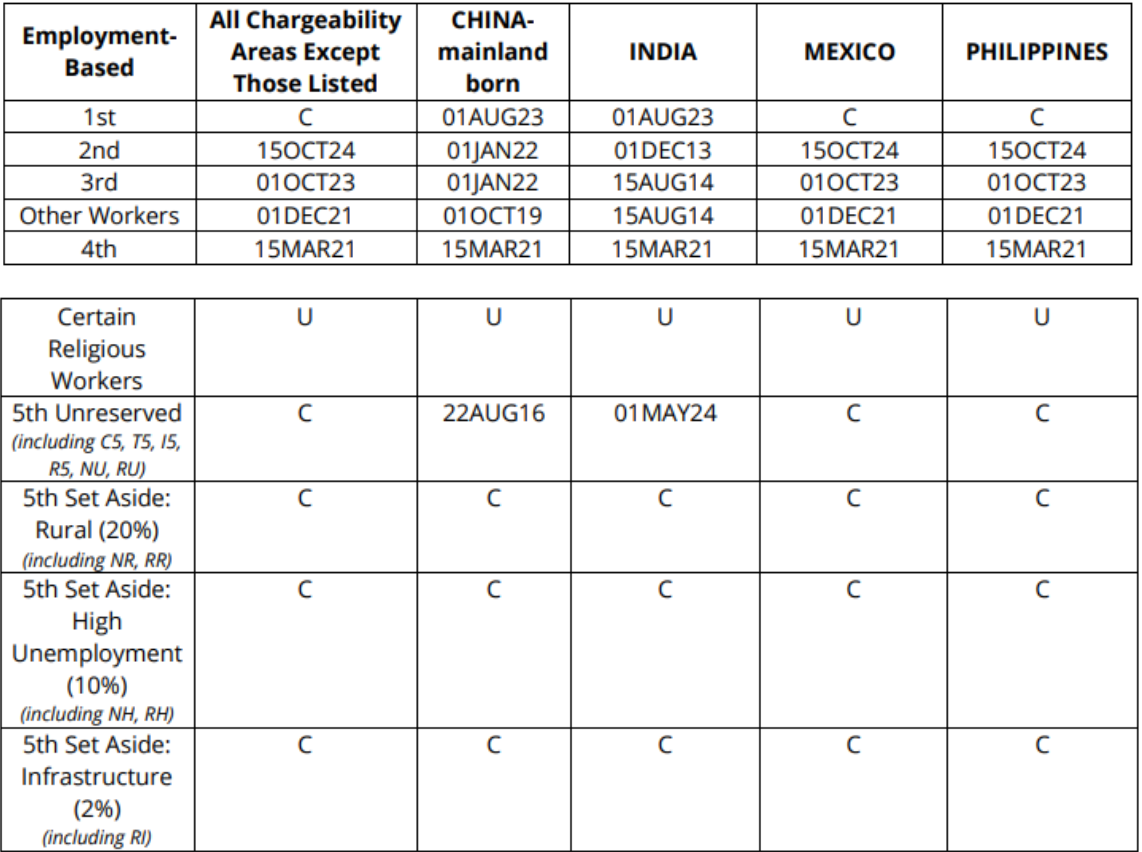
On January 13, 2026, the U.S. Department of State (DOS) issued its monthly Visa Bulletin for February 2026. USCIS has chosen the Dates for Filing chart for employment-based applications for February 2026 to determine eligibility.
USCIS will accept employment-based adjustment of status applications from foreign nationals with a priority date that is earlier than the applicable Date for Filing listed in the State Department’s February 2026 Visa Bulletin.
Dates for Filing for February 2026
EB-1
China: Date remains at August 1, 2023
India: Date remains at August 1, 2023
All other countries: Current
EB-2
China: Date remains at January 1, 2022
India: Date remains at December 1, 2013
All other countries: October 15, 2024
EB-3 Professionals and Skilled Workers
China: Date remains at January 1, 2022
India: Date remains at August 15, 2014
All other countries: Date advances three months to October 1, 2023
EB-3 Other Workers
China: Date remains at October 1, 2019
India: Date remains at August 15, 2014
All other countries: Date remains at December 1, 2021
EB-5 Unreserved (Regional Center and Non-Regional Center)
China: Date remains at August 22, 2016
India: Date remains at May 1, 2024
All other countries: Current
EB-5 Set-Asides
Rural: Current for all countries
High Unemployment: Current for all countries
Infrastructure: Current for all countries
Dates for Filing Chart – February 2026
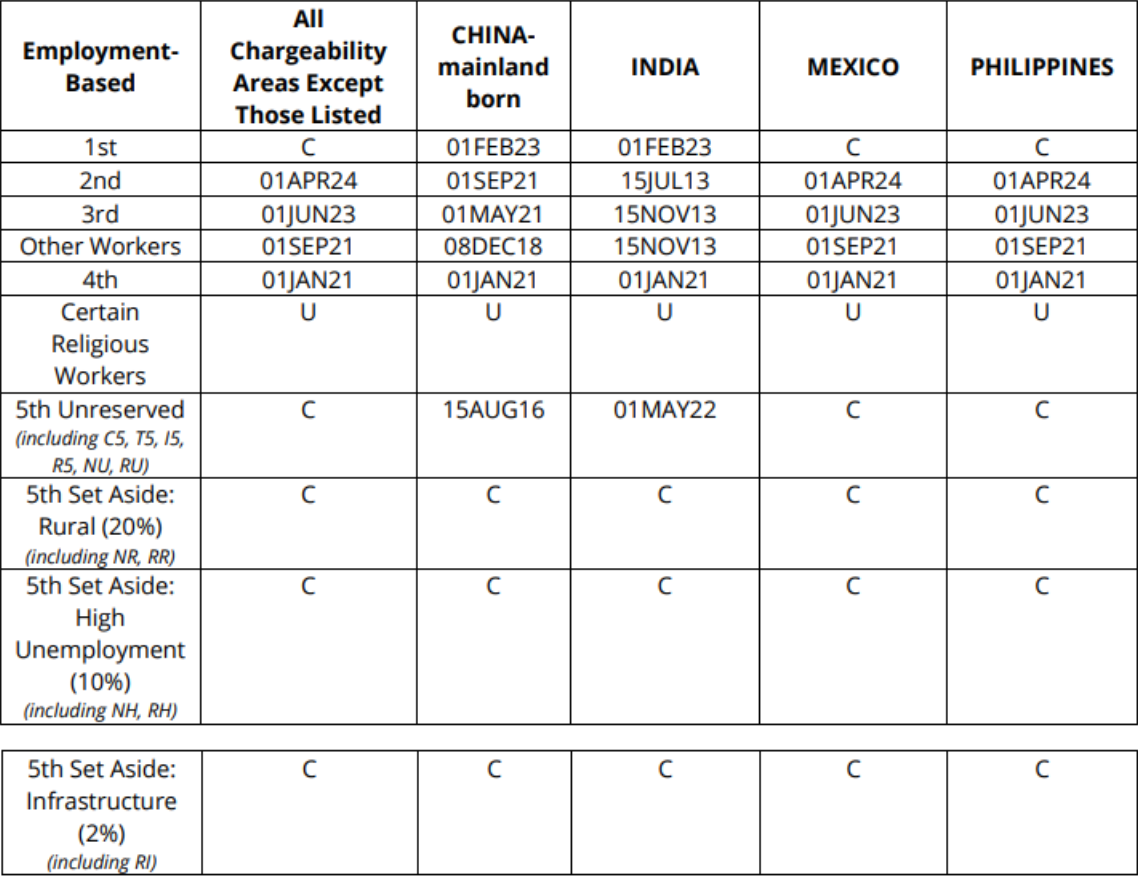
Final Action Dates for February 2026
- EB-1
China: Date remains at February 1, 2023
India: Date remains at February 1, 2023
All other countries remain current
- EB-2
China: Date remains at September 1, 2021
India: Date remains at July 15, 2013
All other countries: Date remains at April 1, 2024.
- EB-3 Professionals and Skilled Workers
China: Date remains at May 1, 2021
India: Date remains at November 15, 2013
All other countries: Date advances six weeks to June 1, 2023.
- EB-3 Other Workers
China: Date remains at December 8, 2018
India: Date remains at November 15, 2013
All other countries: September 1, 2021
- EB-5 Unreserved (Regional Center and Non-Regional Center)
China: Date remains at August 15, 2016
India: Date remains at May 1, 2022.
All other countries remain Current.
EB-5 Set-Asides
Rural: Current for all countries
High Unemployment: Current for all countries
Infrastructure: Current for all countries
- EB-5 Unreserved (Regional Center and Non-Regional Center)
China: Date remains at August 15, 2016
India: Date remains at May 1, 2022.
All other countries remain Current.
- EB-5 Set-Asides
Rural: Current for all countries
High Unemployment: Current for all countries
Infrastructure: Current for all countries
Final Action Dates Chart for February 2026
SOURCES: travel.state.gov/content/travel/en/legal/visa-law0/visa-bulletin/2026/visa-bulletin-for-february-2026.html
USCIS Premium Processing Fee Increases (Effective March 1, 2026)
The US Citizenship and Immigration Services (USCIS) has announced that the cost to request premium processing—a paid service that guarantees faster review of certain immigration filings—will increase again beginning March 1, 2026. This adjustment, required by statute and tied to inflation, will raise fees for various visa classifications and employment-based petitions. The changes affect employers, workers, students, and others who rely on expedited adjudication for petitions and applications, and reflect the agency’s ongoing efforts to align fee revenue with the cost of providing timely services.
Key Points
- Reason for the Increase: The Department of Homeland Security, acting through USCIS, is adjusting premium processing fees to keep pace with inflation, as measured by the Consumer Price Index for All Urban Consumers (CPI-U). This adjustment occurs every two years under current statute to maintain the real value of premium processing revenue.
- Who Is Affected: Fees for Form I-129 petitions (including H-1B, L-1, O-1, and other nonimmigrant categories) and Form I-140 immigrant worker petitions will increase. Fees for other forms eligible for premium processing—such as I-539 (change/extension of status) and I-765 (employment authorization requests)—will also rise.
- Amount of the Increase: For example, the premium processing fee for most I-129 and I-140 petitions will rise from $2,805 to $2,965, for I-539 from $1,965 to $2,075, and for I-765 from $1,685 to $1,780. Fees for H-2B and R-1 classifications under I-129 will increase from $1,685 to $1,780. See chart in the following section.
- Effective Date Requirements: The new fees must be included with any premium processing request postmarked on or after March 1, 2026; USCIS will reject and return requests filed with incorrect fees after that date.
- Premium Processing Basics: Premium processing remains an optional service that allows eligible petitions and applications to receive expedited review—typically within a guaranteed number of business days—helping applicants minimize delays and better plan employment start dates or status changes.
USCIS Fee Increase Chart
| Form | Previous Fee | New Fee |
| Form I-129, Petition for a Nonimmigrant Worker, H-2B or R-1 nonimmigrant status | $1,685 | $1,780 |
| Form I-129, Petition for a Nonimmigrant Worker, all other available Form I-129 classifications:
E-1, E-2, E-3, H-1B, H-3, L-1A, L-1B, LZ, O-1, O-2, P-1, P-1S, P-2, P-2S, P-3, P-3S, Q-1, TN-1, TN-2 |
$2,805 | $2,965 |
| Form I-140, Immigrant Petition for Alien Worker, employment-based classifications: E11, E12, E13, E21 (NIW and non-NIW), E31, E32, EW3 | $2,805 | $2,965 |
| Form I-539, Application to Extend/Change Nonimmigrant Status, requesting: F-1, F-2, J-1, J-2, M-1, M-2 | $1,965 | $2,075 |
| Form I-765, Application for Employment Authorization, for certain eligible applications (OPT and STEM-OPT Classifications) | $1,685 | $1,780 |
What US Employers Need To Know
- Budgeting for Immigration Costs: Employers sponsoring foreign workers under H-1B, L-1, O-1, or immigrant worker categories should update their immigration budget planning to reflect the higher premium processing fees starting March 1, 2026. Failure to include the correct updated fee can lead to returns or rejections of premium processing requests, delaying critical hires.
- Strategic Filing Timing: Employers filing petitions near the fee change date must be mindful of postmark and submission requirements; filings before March 1 may still use the prior fee, but anything afterward must include the new fee to avoid rejection.
- Impact on Staffing Plans: Because premium processing speeds up adjudications (e.g., for work authorization or visa approvals), higher fees could affect decisions about which cases to expedite, especially in competitive hiring environments.
- Employee Considerations: Employers may want to communicate fee changes to employees who might personally request premium processing (e.g., optional practical training (OPT) work permits or change-of-status requests) so they understand increased out-of-pocket costs.
- Compliance and Planning: Employers should review internal calendars and processing timelines to ensure that premium processing is requested appropriately and that fee payments match the classification and postmark date.
Looking Ahead
- Biennial Adjustments Continue: USCIS will likely continue adjusting premiums every two years based on statutory inflation measures, meaning employers and applicants will need to monitor fee changes routinely.
- Budget Pressure on Applicants: As fees increase periodically, applicants and employers may reassess when premium processing is truly necessary, particularly for categories with long adjudication backlogs.
- Service Level Expectations: USCIS states that these fee increases help sustain expedited services and address processing backlogs; whether adjudication times improve remains a key area to watch for applicants and immigration practitioners.
- Potential Policy Shifts: Future changes in immigration policy, budgeting, and fee structure could further alter premium processing access, costs, or timelines, especially if broader USCIS fee regulations are updated.
- Technology and Efficiency Gains: If USCIS adopts new technologies or processes to speed adjudications, the value proposition of premium processing could evolve, influencing how frequently employers rely on expedited services.
In summary, the USCIS premium processing fee increases effective March 1, 2026, represents an inflation-based adjustment to the cost of expedited immigration adjudications, affecting a wide range of visa categories and employment-based petitions. Employers and applicants should prepare for higher fees, adjust budgets accordingly, and ensure accurate fee submission to avoid processing delays. Over time, routine biennial inflation adjustments and broader USCIS fee reforms may influence how and when premium processing is used as part of immigration strategies.
SOURCE: USCIS Newsroom, January 9, 2026: www.uscis.gov/newsroom/alerts/uscis-to-increase-premium-processing-fees
US Indefinitely Suspends Immigrant Visa Processing for People from 75 countries
The U.S. State Department announced on January 14, 2026, on its social media account, X, that it will suspend the processing of immigrant visas for citizens of 75 countries, effective January 21, 2026. This pause applies to permanent-resident visas (often called “green cards”) while the government reassesses its screening procedures to target applicants it considers likely to rely on public benefits — a category officials refer to as “public charges.” Non-immigrant visas like tourist, student, and most work visas are not part of this suspension, but increased vetting could affect applications across visa types. Critics say this move severely restricts legal immigration and could disrupt family unification and economic pathways for hundreds of thousands of prospective immigrants.
Key Points
- Scope of the Policy: The suspension applies only to immigrant visas for permanent residence (green cards), not to temporary travel visas like tourist or student visas. However, consular officers will apply stricter screening for all visa applicants to assess potential public assistance use.
- Reason Behind the Suspension: The administration says the pause is meant to prevent immigrants likely to rely on U.S. welfare from entering the country. Officials describe this as strengthening enforcement of the “public charge” ground of inadmissibility.
- Implementation Details: The policy takes effect on January 21, 2026, and will remain in place indefinitely while the department reassesses visa procedures. Consulates are instructed to refuse visas that have not yet been approved or printed.
- Dual National Exemption: Dual nationals applying with a valid passport of a country that is not listed among the 75 affected countries are exempt from this pause.
- Consular Implementation: Consular officers have been directed to refuse visa applications under existing law until new vetting and screening procedures are fully reassessed.
- Public Charge Focus: Part of the rationale reportedly centers on expanding enforcement of the public charge rule, which targets applicants likely to rely on government benefits, though national security concerns are also cited.
- Implementation Details: The policy takes effect on January 21, 2026, and will remain in place indefinitely while the department reassesses visa procedures. Consulates are instructed to refuse visas that have not yet been approved or printed.
- Exceptions Anticipated: Limited exceptions may be granted but are expected to be evaluated on a case-by-case basis, leaving applicants uncertain about eligibility.
- Connection to Broader Policies: This suspension builds on existing travel bans and pauses in adjudication that have already restricted visa issuance and immigration benefits for many nationalities.
What U.S. Employers Need To Know
- Hiring International Talent: Employers planning to sponsor immigrants from affected countries may face delays or inability to secure permanent residency visas for workers. These pauses could affect long-term workforce planning and talent mobility.
- Non-Immigrant Workers: Work visas such as H-1B and L-1 remain available, but applicants have reported greater scrutiny at non-immigrant visa appointments as a general trend, and some appointments have been canceled and rescheduled to allow for background and social media checks at some posts. Employers should prepare for potentially longer processing times.
- Visa Scheduling Challenges: Even if interviews are scheduled, consular officers may refuse appointments under the suspension guidance, complicating access to needed talent.
- Public Charge and Compliance: Employers should understand how public charge considerations might affect visa eligibility, especially for longer stays or sponsored roles.
- Employee Relocation and Transfers: Transfers for employees from suspended countries may face further scrutiny or delays if their immigration status transitions from non-immigrant to immigrant. HR teams should communicate with legal counsel to navigate these changes.
- Compliance and Documentation: Employers should ensure thorough documentation of job offers, financial stability, and worker qualifications to support any visa applications under heightened scrutiny standards.
- Family-Sponsored Immigration: Companies that assist employees with family immigration plans may find those efforts hindered, affecting morale and retention for international staff.
Looking Ahead
- Policy Duration Uncertain: The suspension has no announced end date and could continue indefinitely until new screening protocols are established. This uncertainty challenges planning for individuals and employers alike.
- Legal Challenges and Advocacy: Immigration rights groups and legal experts are expected to challenge the suspension, citing potential discrimination and harm to legal immigration channels. Court rulings could reshape or halt the policy.
- Future Immigration Policy Trends: This action reflects a broader trend toward restrictive immigration measures that could continue or expand.
- Pending AOS Cases: USCIS has not announced whether it will take a similar review of pending Adjustment of Status cases.
Affected Countries: The countries affected by this suspension are:
- Afghanistan
- Albania
- Algeria
- Antigua and Barbuda
- Armenia
- Azerbaijan
- Bahamas
- Bangladesh
- Barbados
- Belarus
- Belize
- Bhutan
- Bosnia
- Brazil
- Burma
- Cambodia
- Cameroon
- Cape Verde
- Colombia
- Congo
- Cuba
- Dominica
- Egypt
- Eritrea
- Ethiopia
- Fiji
- Gambia
- Georgia
- Ghana
- Grenada
- Guatemala
- Guinea
- Haiti
- Iran
- Iraq
- Ivory Coast
- Jamaica
- Jordan
- Kazakhstan
- Kosovo
- Kuwait
- Kyrgyzstan
- Laos
- Lebanon
- Liberia
- Libya
- Macedonia
- Moldova
- Mongolia
- Montenegro
- Morocco
- Nepal
- Nicaragua
- Nigeria
- Pakistan
- Republic of the Congo
- Russia
- Rwanda
- Saint Kitts and Nevis
- Saint Lucia
- Saint Vincent and the Grenadines
- Senegal
- Sierra Leone
- Somalia
- South Sudan
- Sudan
- Syria
- Tanzania
- Thailand
- Togo
- Tunisia
- Uganda
- Uruguay
- Uzbekistan
- Yemen
In summary, the U.S. government’s suspension of immigrant visa processing for 75 countries marks a significant shift in immigration policy aimed at limiting pathways to permanent residency for those deemed likely to rely on public benefits. While non-immigrant visas remain available, enhanced screening and broader enforcement measures signal deeper changes in how the U.S. evaluates and admits foreign nationals. Employers and prospective immigrants alike will need to adapt to a more restrictive and unpredictable immigration environment.
SOURCES: S. Davis and R. Beitsch. “State Department pauses visa processing from 75 countries,” The Hill, January 14, 2026: thehill.com/policy/international/5689144-state-department-halts-immigrant-visas/; www.usatoday.com/story/graphics/2026/01/15/75-countries-visa-processing-pause-list-map/88184153007/; www.theguardian.com/us-news/2026/jan/14/full-list-75-countries-visa-processing-suspended
USCIS Extends Deadline to Download Older E-Verify Records
U.S. Citizenship and Immigration Services (USCIS) recently announced that employers using E-Verify have additional time to save older case records before they are deleted. Employers now have until January 22, 2026, to download records for E-Verify cases that were last updated on or before December 31, 2015. This extension gives employers a short window to preserve important verification information needed for compliance and recordkeeping purposes.
Key Points: What Employers Need to Know
- Extended Download Deadline: USCIS has extended the deadline for downloading older E-Verify records to January 22, 2026. This applies to cases last updated on or before December 31, 2015.
- Automatic Record Disposal: E-Verify records that are more than 10 years old will be permanently disposed of on January 23, 2026. Employers who do not download these records before that date will lose access to them.
- Historical Records Report Option: Employers can retain case information by downloading the “Historical Records Report” from E-Verify. This report includes basic company information, case verification numbers, and case resolution details.
- Form I-9 Documentation Requirements: USCIS reminds employers to record the E-Verify case verification number on each corresponding Form I-9 or attach a copy of the case details page to the Form I-9. Employers should keep the Historical Records Report together with their Forms I-9 for proper compliance.
SOURCE: www.uscis.gov/i-9-central/form-i-9-related-news/e-verify-records-scheduled-for-disposal-deadline-extended